
What goes into supporting national strategies, and where does IWRAW Asia Pacific fit into it?
Building the praxis of using CEDAW for state accountability, as well as a framework for the implementation of human rights norms and values through interventions by civil society actors, is a key priority in IWRAW Asia Pacific’s evolving strategy, rooted in our current strategic plan, Cultivating Rights, Rooting Resilience.
We acknowledge that in order for civil society interventions to have any meaningful impact in the domestication of CEDAW, they have to be aligned with their advocacy priorities, which must be grounded in national and community-level realities.
Enter India
 Rationale
Given IWRAW Asia Pacific’s commitment to strengthening political understanding of CEDAW as a legally binding human rights standard-setting treaty body, we continue to build long-term partnerships nationally and regionally. This strategy of finding synergy between national and regional capacity and movement building began in India, in view of the CEDAW Committee’s recently published List of Issues Prior to Reporting.
IWRAW Asia Pacific has a long standing partnership with Indian women’s rights organisations since 1993 on the domestication of CEDAW. This was done through rigorous capacity building, CEDAW orientations, training of trainers and movement building at the community, sub-national, national, and regional levels. 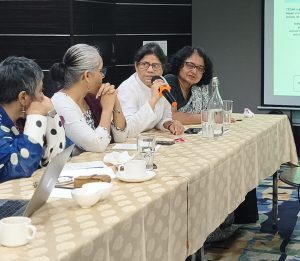
The Indian state’s pushback against CEDAW reporting since 2014 posed challenges on several fronts. The State’s recalcitrance towards its reporting was a flagrant violation of its obligation to the Convention, which in turn hindered its accountability to substantive equality and non-discrimination. But, with the onset of its CEDAW review, the question arose, what can be done with national movements to recenter accountability in the context of gender equality in India, and how can we do it?
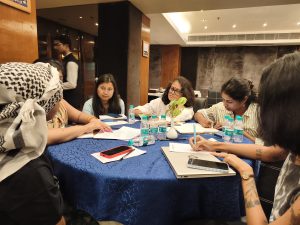
To this end, IWRAW Asia Pacific hosted two events in India, in July 2026. Responding to requests for CEDAW capacity building while realising a layered approach was required, our intervention was two pronged:
- A Consultation on the Strategic Implementation of CEDAW
- A ‘CEDAW for Young Feminists’ Orientation
Both the strategic consultation and the orientation informed a pilot initiative as IWRAW Asia Pacific continues to build our strategy for supporting national movements, with intentions for building broader regional strategies for the Asia and the Pacific region.
The broad objectives of our interventions in India were:
- Introduce and share IWRAW Asia Pacific’s strategic plan, and future plans for national and regional capacity building initiatives done in collaboration with movements on the ground.
- To gain a cross-movement understanding about current contexts and advocacy priorities.
- To map movements’ requirements in their current advocacy efforts, and the role IWRAW Asia Pacific can play in the movement ecosystem.
How does an international treaty body come into play at the frontlines?
As sex workers, women workers, Dalit women, single mothers, trans and LBQ women, migrant women among many other disenfranchised communities of women continue to occupy the frontlines of organising in the face of an authoritarian regime, we found movements asking us and themselves, “how does CEDAW fit into this?”
Our time in India surfaced several nuances on the pursuit of equality and non discrimination through CEDAW’s framework:
- Making CEDAW work for marginalised communities of women
-
- For CEDAW to be the most impactful, it must be able to yield tangible results for women on the ground, particularly women from marginalised communities and stigmatised identities. From the Transgender Persons (Protection of Rights) Amendment Bill 2026 which–among its many harms–forced medicalisation of trans bodies as means to formal recognition while enforcing a narrow definition of transgender people, to the recent mass removal of names from electoral rolls through the Special Intensive Revision process led by the Election Commission of India targeting already structurally excluded women, marginalised communities continue to face the brunt of right-wing policies rooted in patriarchy, heightened conservatism, and caste and class privilege. Efforts for CEDAW implementation can not be seen as a federal-level strategy. The vision of CEDAW is rights for all women, everywhere, at all levels: from non-discrimination legislation to access to clean water in rural settings.
- Adopting a whole-of-system approach to state oligation to international human rights law
-
- CEDAW is a tool. It is a normative tool, an advocacy tool, a legal tool, and an alliance building tool. It also is not the only tool available to movements, but rather one of many which must be used at our disposal wherever possible. For example, and in the case of caste-based discrimination in India, advocacy using international human rights frameworks must also cite the normative standards on the prevention of discrimination on the grounds of caste found in the Convention on the Elimination of Racial Discrimination. Simultaneously, activists working on the rights of women with disabilities called for implementation strategies which build synergy between the Convention on the Rights of Persons with Disabilities and CEDAW, creating a strengthened, multi-pronged foundation for State accountability.
- Delinking CEDAW from Geneva-based processes and UN bureaucracy
-
- An overarching observation and the ethos of IWRAW Asia Pacific’s work is the need to decenter the technicalities of Geneva-based processes from CEDAW advocacy. CEDAW implementation does not begin and end at India’s state review in Geneva. To this end, access to justice at the community and national level through courts using CEDAW’s normative standards emerged as a key advocacy priority in domestication efforts. This modality of work has been adopted by some legal organisations who have adopted Articles 15 (equality before the law) and 16 (equality in marriage) into legal proceedings and trials. CEDAW’s vision can only be realised when it is actively used to claim rights through domestic processes.
“CEDAW’s rights-based framework could help young leadership articulate their politics in ways that resonate with them. For example, in Muslim women’s organising around rights that extend beyond citizenship (such as inheritance within marriage) as a case study in how CEDAW’s framing of “enjoyment of rights” intersects with these lived realities”- Sabika Abbas
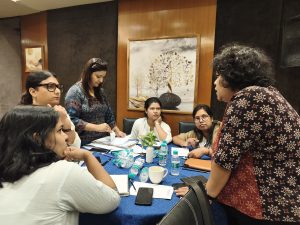 While the partners explored the technicalities of CEDAW’s framework, implementation and its processes, the most valuable takeaway of our intervention was perhaps the dialogical and collaborative mode of exchange. Talking about CEDAW, separated from the technical processes of reporting and CSO engagement, made space for a more political deep dive into what accountability means, and what its realistic practice looks like when our collective end goal is the claiming of rights.
Despite existing disillusionment with the multilateral system and international human rights mechanisms, IWRAW Asia Pacific’s engagement with national movements in India demonstrated the continued interest of feminist activists, especially young feminists, in the promise of CEDAW. Our strategy continues to be inspired by the exploration of creative interpretations of CEDAW’s framework and strategies for CEDAW advocacy and implementation, led by the mobilisation of grassroots women.
This blog was developed based on event documentation by Hameeda Syed and Tridib Mukherjee.